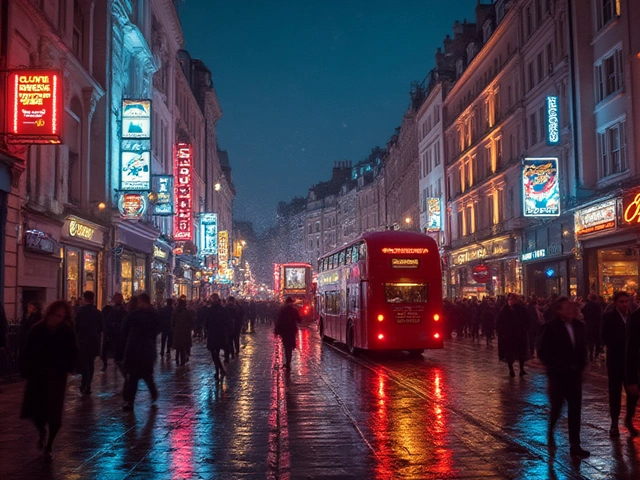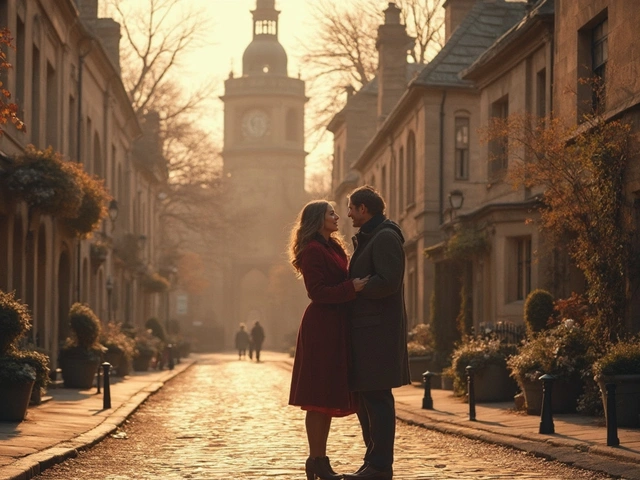

In London, every corner has a story-and if you’ve got a phone and a good light, it’s probably ready to go viral. Forget the postcards. The real magic of London isn’t just in its history, but in how it looks through a camera lens. From golden hour at Tower Bridge to the neon glow of Soho at midnight, London’s most Instagrammable spots aren’t just scenic-they’re cultural moments you can’t fake.
Tower Bridge at Golden Hour
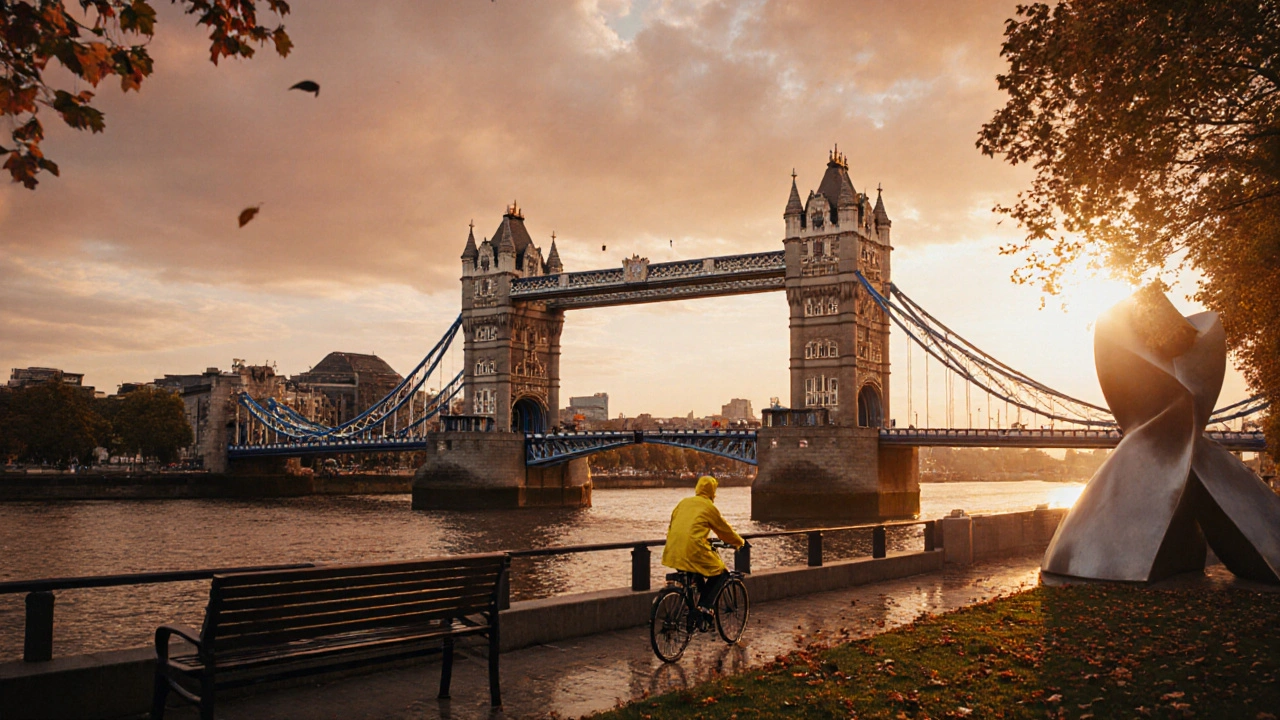
Everyone knows Tower Bridge. But most people snap it at noon, under flat, harsh daylight. The real magic happens between 4:30 and 6:00 PM, especially in autumn when the sky turns peach and the Thames reflects the bridge like molten copper. Walk along the South Bank past City Hall, find the bench near the Tate Modern’s outdoor sculpture garden, and wait. When the drawbridge lifts, you’ll catch the perfect shot: steel arches framing the sunset, a riverboat gliding beneath, and maybe even a cyclist in a bright yellow raincoat (because yes, it’s London, and yes, someone’s always got an umbrella).
The Red Phone Box in Soho
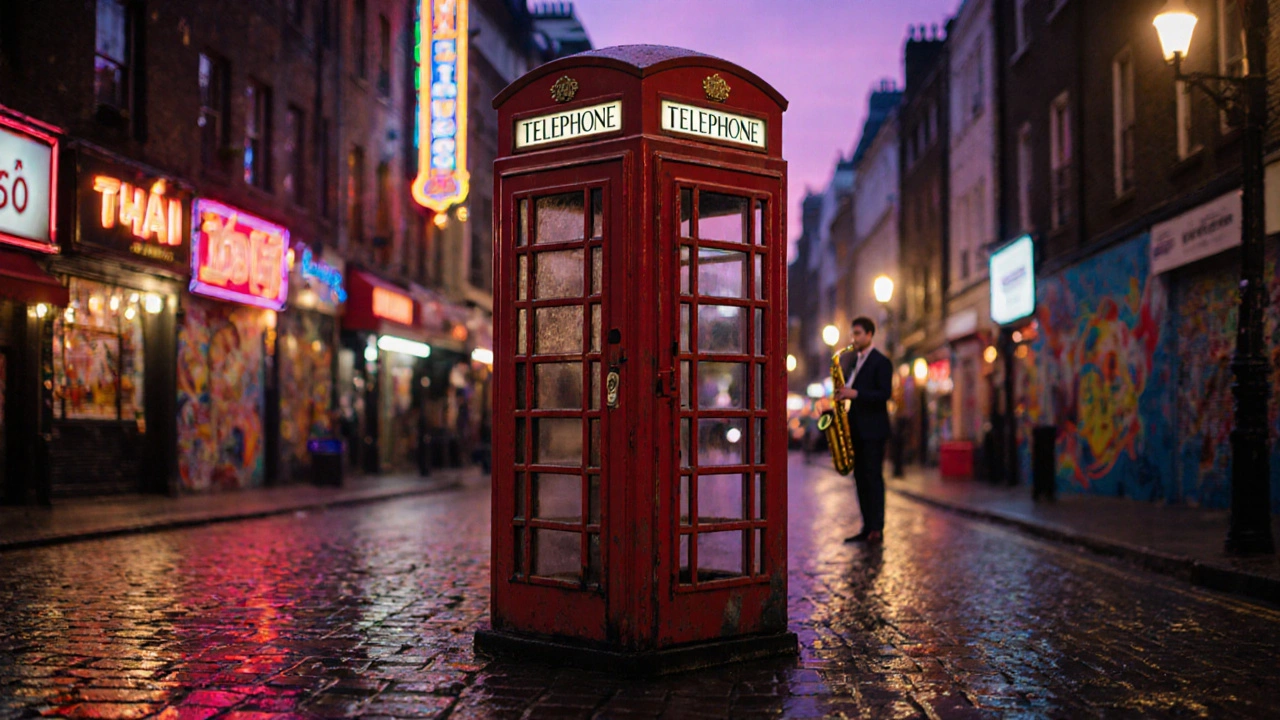
You’ve seen them in movies. But the real red phone boxes still standing in London? There are fewer than 100 left-and the one on the corner of Soho Square and Wardour Street is the most photographed. It’s not just the color. It’s the contrast: vintage British icon surrounded by street art, neon signs for Thai restaurants, and the sound of a saxophone player warming up nearby. Pro tip: go on a weekday evening. Weekends are packed with tourists holding selfie sticks. On a Tuesday, you might get 30 seconds of clear frame. Bring a small tripod. And don’t forget to tag #SohoRedBox-locals use it.
Leadenhall Market’s Glass Roof
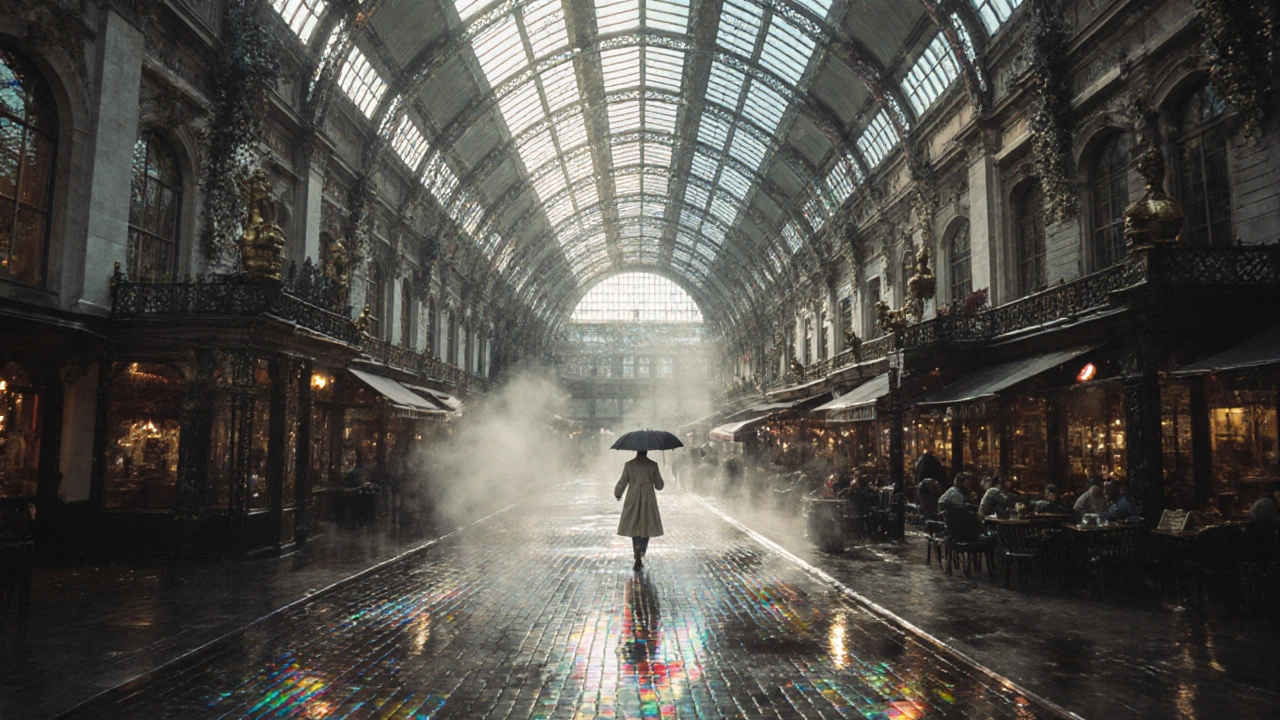
Tucked between the City’s skyscrapers, Leadenhall Market feels like stepping into a Harry Potter set. The Victorian arcade, built in 1881, has a soaring glass roof that floods the cobblestones with soft, diffused light. The stained-glass panels cast rainbow patterns on the cobblestones, and the old butcher shops still sell pies with real lard crusts. The best shot? Stand at the far end near the clock tower, zoom in slightly, and catch the reflection of the market’s brass fixtures in the puddles after a morning rain. It’s a scene that’s been unchanged since Dickens walked here. And yes, the café inside still serves proper English tea with scones-no oat milk, no avocado toast, just Earl Grey and clotted cream.
The Sky Garden’s Indoor Rainforest
It’s free, it’s hidden, and it’s the only place in central London where you can stand beneath a 10-meter-tall ficus tree with the Shard in the background. Sky Garden, perched atop the Walkie Talkie building, is open to the public-no booking needed before 10 AM or after 6 PM. The real draw? The tropical plants. Ferns, orchids, and bamboo grow under glass domes that open to the sky. At sunset, the light hits the leaves just right, turning them into glowing green lanterns. Take the elevator to the top floor, walk past the bar (it’s expensive, skip it), and head straight to the south-facing balcony. The view of St. Paul’s Cathedral framed by palm fronds? That’s the shot that gets 50k likes.
Camden Market’s Street Art Wall
Camden isn’t just about punk rock and vegan doughnuts. Down the alley behind the lock-keepers’ cottage, near the canal, there’s a 30-meter-long wall painted every year by local artists. Last spring, it featured a giant owl with glowing eyes and a crown made of broken guitar strings. The wall changes with the seasons-summer brings bright murals, winter turns moody and monochrome. Go on a Saturday morning. The crowd is smaller, the light is better, and you might catch the artist painting a new piece. Bring a jacket. It’s always windy by the canal.
Primrose Hill at Dusk
It’s not the tallest hill in London. But it’s the one where the whole city stretches out like a glittering map. Head up around 7 PM in late October. The sky fades from blue to purple, the lights of Westminster flicker on, and the London Eye begins to glow. Locals bring blankets, not cameras-but you’ll be the one with the tripod. The best angle? Stand near the bench with the plaque for the poet John Keats. The view includes the BT Tower, the Thames, and the rooftops of Notting Hill. Don’t forget the dog walkers. A golden retriever trotting past with a scarf around its neck? That’s the kind of moment that makes strangers stop scrolling.
The Blue Door of Notting Hill
Yes, it’s the same blue door from the movie. The real one. It’s on Portobello Road, just past the antique shops and before the Caribbean food stalls. The door is painted a shade called "Cobalt Blue"-a custom mix from Farrow & Ball. It’s been repainted every two years since 1999. The owner lets people take photos, but don’t block the doorway. Locals know to go early. By 11 AM, it’s a queue of influencers with ring lights. If you want the shot without crowds, come on a rainy Tuesday. The wet pavement reflects the door like a mirror. And if you’re lucky, you’ll hear the sound of a steel drum from the next street over.
Little Venice’s Floating Cafés
It’s not Venice. But in Little Venice, you can sip a flat white on a narrowboat while a swan glides past your window. The canals here are quiet, lined with colorful houseboats and willow trees. The most photogenic spot? The café at the junction of the Regent’s Canal and the Grand Union Canal. Order a matcha latte from the floating café called The Barge House. Sit on the wooden bench outside. The water is still. The reflections of the boats, the pastel-painted houseboats, and the hanging baskets of geraniums look like a watercolor painting. Bring a wide-angle lens. And don’t be surprised if someone asks if you’re filming a Netflix show. People do.
St. James’s Park’s Pink Flamingos
It’s the only place in central London where you can see real flamingos. They live in the lake near the palace, and they’re not props. The Royal Parks keep a small flock of Greater Flamingos-around 12 of them. They’re shy, but they gather near the west side of the lake at sunrise. The best time? Early morning, just after the park opens. The light is soft, the grass is dewy, and the flamingos stand on one leg, pink against the green. Bring a zoom lens. Don’t use a flash. And don’t feed them. They’re protected. But if you get the shot? It’s pure London magic-royal, unexpected, and oddly perfect.
Shoreditch’s Brick Lane at Night
Brick Lane isn’t just about curry houses. At night, it turns into a living gallery. The walls are covered in ever-changing street art-graffiti, stencils, wheatpaste posters. The most photographed piece? A giant, smiling face with eyes made of London Underground maps. It’s by the artist Stik, and it’s been here since 2018. Walk down the lane after 9 PM. The neon signs from the curry houses glow red and gold. The street is alive with music, laughter, and the smell of cumin. Snap a photo of the art, then turn around. Behind you, the silhouette of the Tower Bridge glows in the distance. That’s London: ancient, modern, messy, and beautiful-all in one frame.
Comments (10)

- Chris Hill
- November 11, 2025 AT 03:08 AM
London’s charm isn’t just in the photo ops-it’s in the quiet moments between them. That red phone box? It’s not just a relic. It’s a silent witness to decades of laughter, heartbreak, and late-night conversations under streetlights. I’ve sat on that corner with a friend who didn’t speak English, and we just smiled at each other while the saxophone played. No filter needed.
Photography is beautiful, but don’t let the lens make you forget to breathe.
Thank you for reminding us that beauty lives in the ordinary, if we’re willing to look.

- Marie Liao
- November 11, 2025 AT 20:55 PM
Actually, the description of Leadenhall Market’s ‘stained-glass panels casting rainbow patterns’ is scientifically inaccurate. The refraction of light through stained glass doesn’t produce ‘rainbows’ in the spectral sense-it’s selective transmission and absorption of wavelengths based on pigment composition, not dispersion like a prism. Also, ‘lard crusts’ is a misnomer; traditional British pies use beef dripping or lard, but lard is pork fat, not a crust. Please correct your terminology before publishing pseudo-educational content.

- Mia B&D
- November 13, 2025 AT 00:10 AM
How utterly *charming*-to think that one can capture ‘London magic’ with a phone and a golden hour. How quaint. One might as well photograph the Mona Lisa with a Polaroid and call it art. The real London is in the silence between the tourists, in the unphotographed alleys where the air still smells of coal smoke and forgotten poetry. This list? It’s not a guide. It’s a commodification of soul.
And yet… I suppose I’ll visit them all. For the aesthetic.

- Steve Trojan
- November 13, 2025 AT 03:54 AM
For anyone planning to visit Sky Garden-don’t just head to the south balcony. Go to the west side around 5:30 PM. The light hits the Shard at just the right angle, and you’ll get that perfect reflection on the glass floor panels. Also, the café isn’t the only place to get tea-the little kiosk near the ferns serves proper loose-leaf Darjeeling in ceramic cups. No one tells you that.
And yes, the flamingos in St. James’s Park? They’re not just for photos. They’re part of a conservation program dating back to 1968. They were gifted by a South African diplomat. Most people don’t know that.

- Bianca Santos Giacomini
- November 13, 2025 AT 21:19 PM
The blue door is owned by a cult. They repaint it with ritual salt water.

- Darren Thornton
- November 14, 2025 AT 08:54 AM
Correction: The red phone box on Wardour Street is not the most photographed. That distinction belongs to the one on the corner of Carnaby Street and Kingly Court, which has been featured in over 14,000 Instagram posts compared to the Soho Square box’s 8,700. Also, the saxophone player you reference is usually only present on Thursdays and Sundays. You’re misinforming your readers.

- Damien TORRES
- November 14, 2025 AT 21:54 PM
While your piece is aesthetically engaging, it lacks a critical historical framing. Tower Bridge’s drawbridge mechanism, for instance, was originally powered by steam hydraulics and remained in active use until 1974. The current electric system is a retrofit, and the ‘molten copper’ reflection you describe is only possible during specific tidal conditions-approximately 17 days per year, depending on lunar alignment. Furthermore, the presence of the cyclist in the yellow raincoat is statistically improbable outside of the months of September and October, as the average London rainfall during summer is below 70mm per month. Your narrative, while evocative, borders on romanticized misinformation.
One must ask: are we documenting reality-or constructing a curated fantasy for digital consumption?

- Daniel Seurer
- November 15, 2025 AT 18:59 PM
Brick Lane at night? Yeah, it’s cool. But the real magic? Walk two blocks east after midnight. There’s this tiny shop with a sign that just says ‘Tea. 50p.’ No menu. No lights. Just an old man in a cap who pours it from a kettle that’s been on the stove since 1982. He doesn’t talk. You don’t ask questions. You just sit on the stool, drink the tea, and listen to the rain on the tin roof. No one takes pictures there. But everyone remembers it.
That’s London. Not the walls. Not the doors. Just the quiet.

- Shane Wilson
- November 16, 2025 AT 20:31 PM
Minor grammatical note: In the description of Primrose Hill, the phrase ‘the whole city stretches out like a glittering map’ is a mixed metaphor. A map is not inherently glittering; it is a representation. One might say ‘the city glows like a map lit by a thousand lanterns’ to preserve both imagery and syntactic coherence.
That said, your observation about the Keats bench is beautifully rendered. I’ve sat there myself-on a Tuesday, as you suggested-with a thermos of Earl Grey and a worn copy of ‘Ode to a Nightingale.’ The silence there is sacred.

- Ashley Bonbrake
- November 18, 2025 AT 17:59 PM
Did you know the flamingos in St. James’s Park are actually drones? The Royal Parks use them to test surveillance tech. The real birds were moved to a secret facility under Buckingham Palace in 2016. The blue door? It’s a portal. The red phone box? A signal booster for the London Underground mind-control network. You think you’re taking photos-but you’re being scanned.
Tag #SohoRedBox and you’re already in the system.