
You don’t need to break the bank to eat well in London. In fact, some of the most satisfying meals in the city cost exactly £0. From community kitchens serving hot plates to food banks handing out fresh groceries, and pop-up events where chefs give away leftovers-London’s free food scene is alive, diverse, and surprisingly widespread. If you’re on a tight budget, a student, or just curious where the city feeds its people for free, this is your guide.
What You’ll Find in London’s Free Food Network
London’s free food isn’t just about scraps or charity meals. It’s a network of organized efforts-run by charities, churches, mosques, community centers, and even restaurants-that turn surplus food into nourishment. You’ll find hot, cooked meals, grocery hampers, fresh fruit and veg, and even bakery items. Some places serve sit-down dinners. Others hand out packed lunches you can take away. The quality? Often better than you’d expect.
Take The Felix Project, for example. They rescue 50,000 meals a week from supermarkets and restaurants that would otherwise go to waste. These meals go to schools, homeless shelters, and community hubs across the city. Or City Harvest, which delivers fresh produce to food banks in Hackney, Tower Hamlets, and Southwark. You won’t find moldy bread here. You’ll find apples, eggs, chicken, and bread-everything you’d buy at the market.
Why Free Food in London Matters
One in five Londoners lives in poverty. That means nearly 1.2 million people struggle to afford groceries. Free food isn’t a luxury-it’s survival. But it’s also more than that. These programs build community. They connect people who are isolated. They give dignity. No one has to beg for food. You walk in, you’re greeted, you get a meal, and you leave with your head held high.
And it’s not just for people in crisis. Students, gig workers, low-income families, and even tourists have used these services. I’ve seen university students grabbing a hot lunch at a church hall in Camden. I’ve met a nurse working night shifts who picks up a grocery box on her way home from King’s College Hospital. Free food isn’t a sign of failure-it’s a safety net that works.
Types of Free Food Available in London
Not all free food is the same. Here’s what you can actually find:
- Hot meals - Served daily at community centers, mosques, and churches. Often lunch or dinner, sometimes breakfast. Examples: The Trussell Trust food banks, St Mungo’s kitchen in Westminster, and the Muslim Welfare Association in Tower Hamlets.
- Food hampers - Grocery bags with 3-5 days’ worth of meals. Usually handed out weekly or biweekly. You need to register, but no ID is required at most locations.
- Surplus food pop-ups - Run by apps like Too Good To Go and Olio. These aren’t free, but they offer discounted meals (often £1-£3) from restaurants that would throw food away. Some cafes and bakeries also give away day-old bread or pastries at closing time-just ask.
- University and college food banks - Many universities, including UCL, King’s, and LSE, have student-run food pantries. You just need your student ID. Some even offer free cooked meals on weekends.
- Free food festivals - Events like London Food Bank Day or Community Kitchen Fest happen quarterly in places like Peckham, Brixton, and Ealing. You get a full meal, live music, and sometimes even free fruit or coffee.
How to Find Free Food in London
You don’t need to wander aimlessly. Here’s how to find the nearest spot:
- Search ‘food bank near me’ on Google. Most are listed with opening hours and contact info.
- Use the Trussell Trust map - They run over 1,200 food banks across the UK. Their website shows exactly which ones are open in your area.
- Check local community centers - Libraries, churches, and mosques often post free meal schedules on their noticeboards or Facebook pages.
- Ask at local cafes - Many independent cafes in East London and South London have a ‘pay it forward’ board. If you say, ‘Do you give away day-old bread?’ they’ll often say yes.
- Join local Facebook groups - Search ‘Free Food London’ or ‘[Your Area] Food Share’. People post daily: ‘Free pasta at St Mary’s Church tonight’ or ‘Extra veggies-come get them!’
Pro tip: Go early. Popular spots like the one in Peckham Rye get long lines by noon. Arrive before 11am for the best selection.
What to Expect When You Walk In
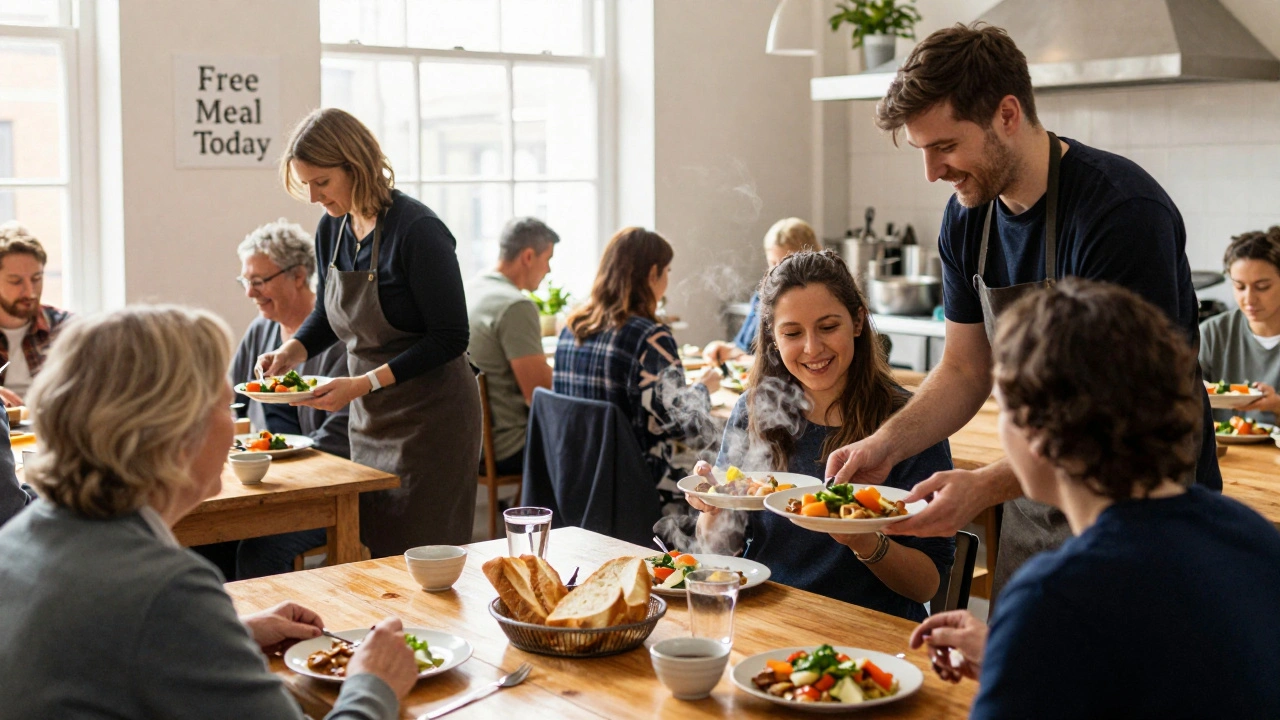
Most places are quiet, respectful, and warm. You won’t be asked why you’re there. No forms. No judgment. Just a smile and a plate.
At St. Martin-in-the-Fields in Trafalgar Square, you get a three-course meal with dessert-cooked by volunteers and served on real plates. At The Clink Charity in Brixton, meals are made by inmates trained in culinary arts. You’ll taste real food, not just beans on toast.
Some places have seating. Others are grab-and-go. You might be asked to wait your turn. You might be offered a cup of tea. You might even be invited to help serve the next person. That’s part of the culture-community, not charity.
Free Food vs. Paid Food: What’s the Difference?
Here’s a quick comparison:
| Feature | Free Food | Paid Meal (Budget Option) |
|---|---|---|
| Cost | £0 | £3-£8 |
| Quality | Often fresh, homemade, varied | Often processed, limited options |
| Availability | Depends on location and time | Available daily |
| Environment | Community-focused, welcoming | Fast, impersonal |
| Requirements | Usually none | Payment only |
The biggest difference? Free food connects you to people. Paid food just fills your stomach.

When to Go and What to Bring
Most free meals run Monday to Friday, 12pm-3pm. Some have evening slots (6pm-8pm). Weekends are rarer, but not unheard of-especially in areas with high need like Newham or Brent.
You don’t need to bring anything. But if you want to be respectful:
- Bring a reusable bag if you’re picking up groceries.
- Arrive on time-lines grow fast.
- Don’t take extra unless asked. These are for people who need them.
- Say thank you. Volunteers work hard.
And if you’re feeling generous? Bring a tin of beans or a loaf of bread to donate. Most places have a box near the door.
FAQ: Your Questions About Free Food in London Answered
Do I need proof of income to get free food in London?
No. Most free food providers don’t ask for ID, bank statements, or proof of hardship. They operate on trust. You just show up. Some food banks may ask for a referral from a social worker or school, but that’s not common. If someone asks for documents, it’s likely not a trusted provider-check their website or call ahead.
Can tourists access free food in London?
Yes. While most services prioritize local residents, many won’t turn away a visitor in need. If you’re traveling on a tight budget and find yourself short on food, walk into a church hall or community center during meal hours. They’ll help you. Just be polite and clear about your situation.
Is the food safe and hygienic?
Absolutely. All registered food banks and community kitchens follow strict food safety rules. Many are inspected by the local council. Volunteers are trained in hygiene. The food comes from supermarkets and restaurants that meet health standards. You’re getting safe, fresh meals-not expired leftovers.
Are there free food options for vegans or people with dietary needs?
Yes, increasingly so. Many providers now offer vegan, halal, gluten-free, and diabetic-friendly options. Places like The Food Assembly in Islington and East London Food Share specifically label meals by dietary need. Always ask when you arrive-they’ll let you know what’s available.
Can I volunteer to help serve free food?
Definitely. Most organizations welcome volunteers. You can help cook, serve, pack boxes, or even drive deliveries. It’s a great way to meet people and give back. Visit the website of The Felix Project, City Harvest, or your local food bank to sign up. No experience needed-just a willingness to help.
Next Steps: How to Use This Guide
Start small. Pick one day this week. Find the nearest free meal spot using Google Maps or the Trussell Trust site. Go at lunchtime. Sit down. Eat. Talk to the person next to you. You might be surprised who’s there-and what you learn.
If you’re not in need, consider donating. A £5 gift to a local food bank can feed someone for a week. Or drop off a bag of rice or tins at your local church. You don’t need to be rich to make a difference. Just a little kindness goes a long way in this city.
London feeds its people-not just with restaurants and cafes, but with compassion. And that’s something no price tag can measure.